Beachcombing Report: Blue Dragons
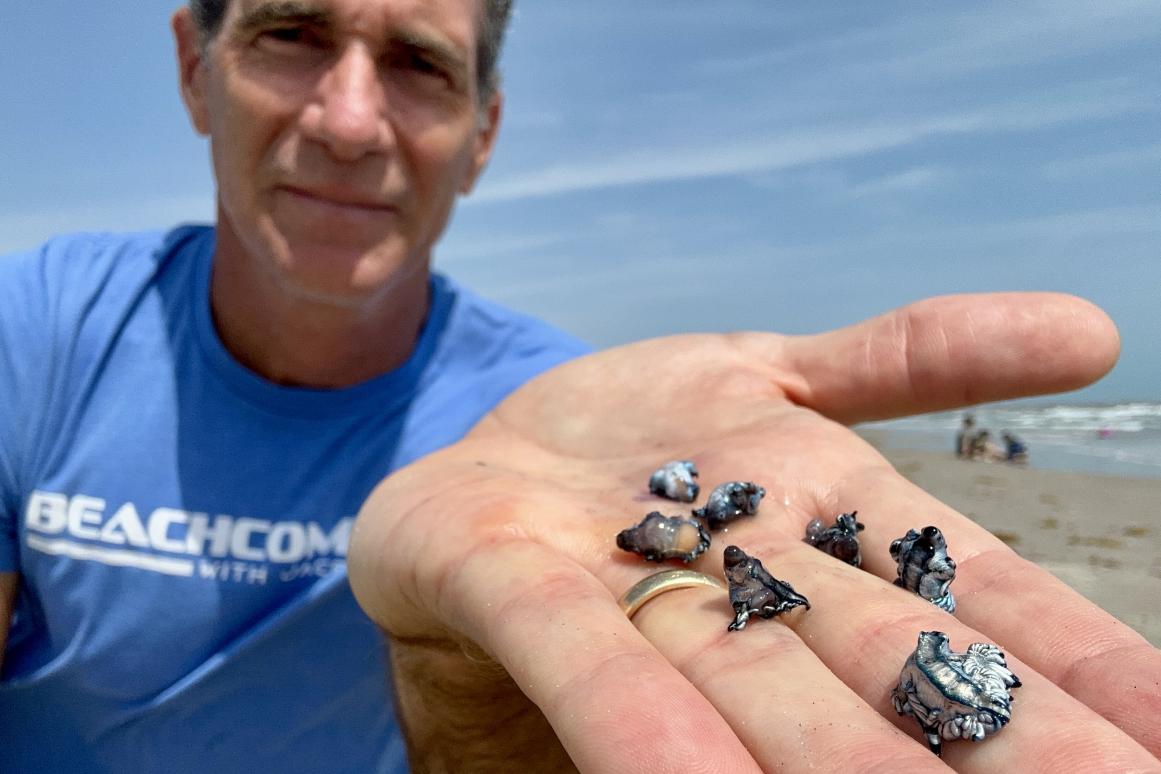
This week’s beachcombing brought an unforgettable sight along our Texas shoreline: blue dragons. While walking a short stretch of beach, I counted nearly 20 of these tiny, electric-blue sea slugs scattered along the sand. They arrived with what beachcombers often call a “blue wave”, a flotilla of open-ocean drifters pushed in by wind and currents. Mixed in with the dragons were Portuguese man o’ war, by-the-wind sailors, blue buttons, and delicate purple storm snails.
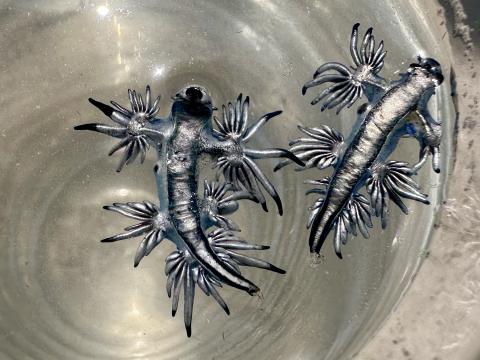
Blue dragons (Glaucus atlanticus) are among the most striking animals that wash ashore. Only about an inch long, their silver and sapphire bodies branch into fingerlike appendages that make them look like miniature sea dragons or living snowflakes. When placed in a small glass of seawater, they glide gracefully upside down along the surface, using a gas-filled sac in their stomach to float. Watching them move is mesmerizing.
But despite their beauty, these animals deserve respect and distance.
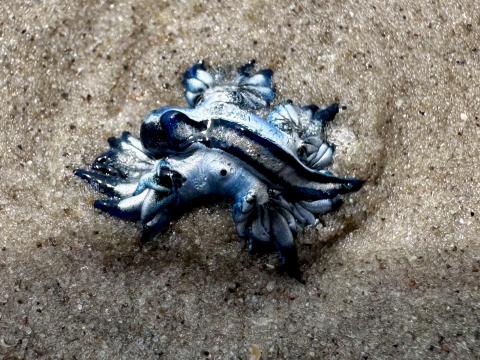
Blue dragons feed on stinging creatures such as Portuguese man o’ war. As they consume them, they store the stinging cells in their own tissues and concentrate them in the tips of their appendages. This means their sting can be even more painful than the animals they eat.
While they typically sting only when threatened, unlike the Portuguese man o’ war, which can sting on contact, handling them is still a bad idea. I carefully moved the ones I found with my hands, but that’s not something I recommend others try. Their sting can be intense, and some people may experience severe reactions.
If you’re lucky enough to spot a blue dragon on the beach, enjoy the rare encounter, just admire it from a safe distance.
After all, even the smallest sea dragon carries a powerful defense.
Jace Tunnell is the Director of Community Engagement for the Harte Research Institute at Texas A&M University-Corpus Christi. His Beachcombing series appears on YouTube (@HarteResearch), Facebook (facebook.com/harteresearch), and Instagram (@harteresearch).