
‘Sink Your Shucks™' Events Bring Community Together for Oyster Reef Restoration
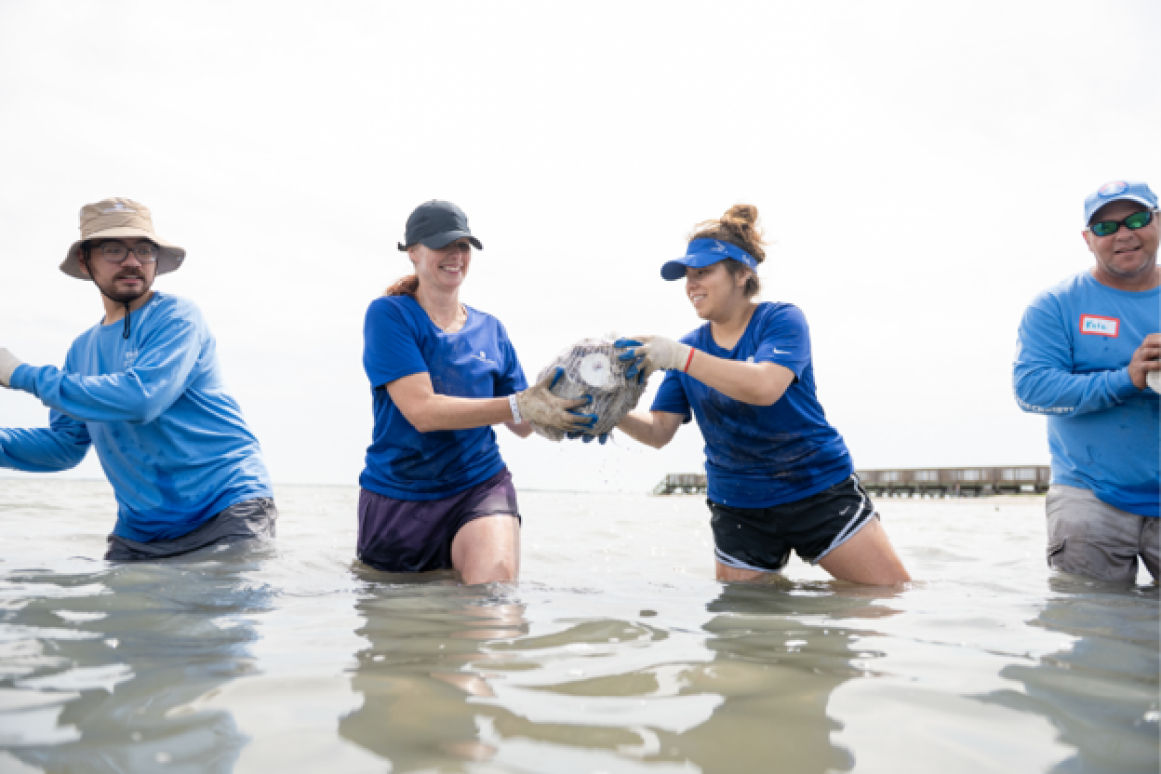
Students and volunteers of all ages help build oyster habitat in St. Charles Bay
On May 5 and May 9, 2026, more than 330 students, teachers and community volunteers gathered at Goose Island State Park in Rockport, Texas. Together, they helped restore oyster habitat in St. Charles Bay through hands-on restoration events hosted by the Sink Your Shucks™ Oyster Shell Recycling Program.
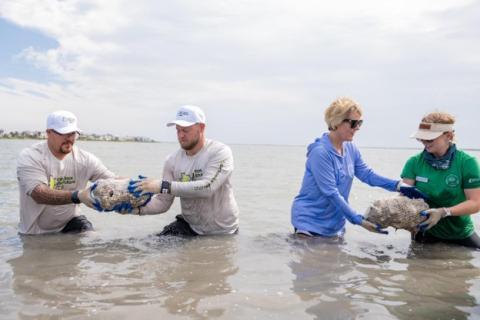
Sink Your Shucks™ is a program of the Harte Research Institute's Coastal Conservation and Restoration Group that collects discarded oyster shells from local restaurants, oyster farms, and festival partners across the Coastal Bend and Central Texas and returns the shells to Texas bays for habitat restoration.
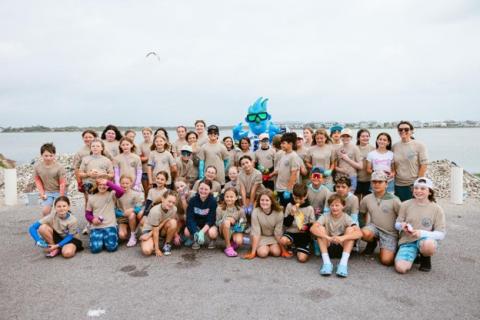
Now in their second year, student-centered restoration events provide local youth with an opportunity to learn about oyster reefs through direct participation in restoration activities. This year, more than 150 students from Corpus Christi ISD, Seashore Middle Academy, and Rockport Fulton ISD worked alongside researchers and program staff to help return recycled oyster shell to the bay.
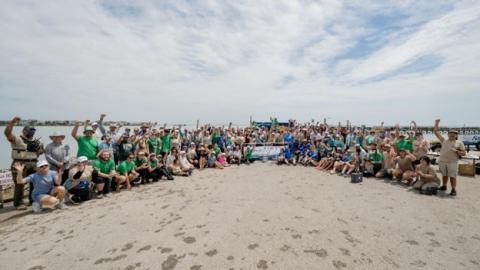
A public restoration event on May 9 brought together more than 170 community volunteers from across the state. Through this year’s events collectively, participants filled more than 2,200 biodegradable bags with reclaimed oyster shell, returning an estimated 31,000 pounds of shell to St. Charles Bay. Volunteers worked together to move bags filled with oyster shell into the water, where they will help create new substrate for baby oysters to attach to and habitat for fish, crabs, and countless other marine species.
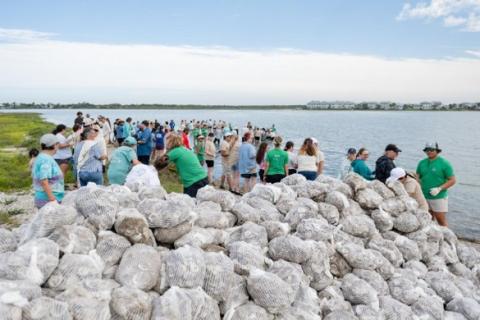
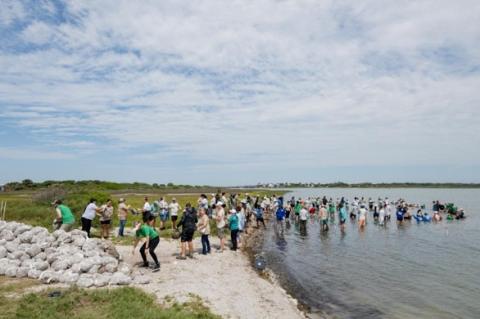
In addition to participating in restoration activities, students and volunteers learned how oyster reefs support healthy bay systems through habitat creation, water filtration, and shoreline protection. Program staff were joined by conservation and education partners from across the Coastal Bend, including Goose Island State Park’s Rangers, Coastal Conservation Association Texas, Texas Surf Conservancy, the Oyster Resource and Recovery Center, International Crane Foundation, Texas Master Naturalists of South Texas, and Clearwater Oyster Farm. By connecting community members directly to conservation and restoration efforts, the events provided a hands-on opportunity to contribute to the health of Texas bays while gaining a deeper understanding of coastal ecosystems. These experiences help foster environmental stewardship and highlight the importance of collaborative efforts to protect and restore Texas coastal habitats.
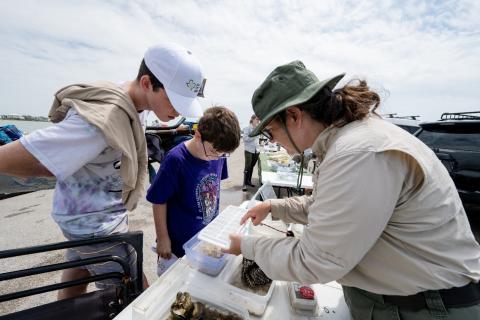
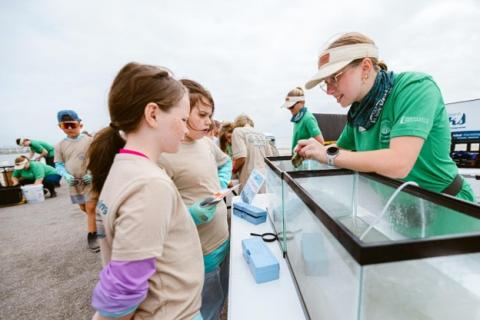
Oyster reefs play an important role in maintaining healthy and productive bays. However, oyster reef habitat has declined throughout the Gulf Coast, making restoration efforts increasingly important for the long-term health of coastal ecosystems.
Through events like these, Sink Your Shucks™ continues to connect communities with conservation while diverting valuable shell resources to the water, where they can once again support oyster reefs and the many species that depend on them.